Bill Graham Bio
Building the Fillmore and More
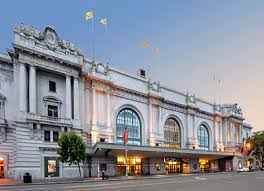
The Fillmore
The building above became The Fillmore. It was built in 1912 and initially housed the Majestic Hall and Academy of Dancing. Its name was changed from the Majestic Hall in 1936 to the Ambassador Dance Hall. From 1939 to 1952, it operated as the Ambassador Roller Skating Rink. In 1954, Charles Sullivan, one of the most successful African-American businessmen in San Francisco, started booking bands and renamed The Fillmore Auditorium venue. In December 1965, Sullivan let Bill Graham use his dance hall permit to book a benefit for the San Francisco Mime Troupe, and after that, Graham continued to book shows there.
Sullivan was murdered in August 1966 at the age of 57.
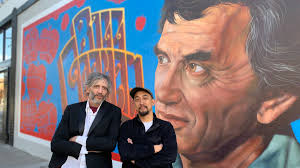 Bill Graham is the rock icon behind The Fillmore, the Day on the Green concerts, and the overall popularization of rock music in the late 60s and 70s in San Francisco and across the country. Graham’s legacy lives on both in rock circles and in the fabric of San Francisco, perhaps best exemplified by the naming of the Bill Graham Civic Auditorium after his passing away in 1991. While the auditorium’s website simply states that he “began the rock ‘n roll movement in San Francisco in the 1960s” (Bill Graham Civic Auditorium), his impact on the music scene was much more nuanced. His business acumen and the way he ran his business often ran counter to the values held by artists in the counterculture movements of the time—the same artists that gave him the opportunity to rise to fame. Bill Graham is the rock icon behind The Fillmore, the Day on the Green concerts, and the overall popularization of rock music in the late 60s and 70s in San Francisco and across the country. Graham’s legacy lives on both in rock circles and in the fabric of San Francisco, perhaps best exemplified by the naming of the Bill Graham Civic Auditorium after his passing away in 1991. While the auditorium’s website simply states that he “began the rock ‘n roll movement in San Francisco in the 1960s” (Bill Graham Civic Auditorium), his impact on the music scene was much more nuanced. His business acumen and the way he ran his business often ran counter to the values held by artists in the counterculture movements of the time—the same artists that gave him the opportunity to rise to fame. |
Bill Graham’s rise to fame coincided with (and is partly owed to) the heyday of late 60s counterculture movement and its music scene in San Francisco. Greg Gaar, a native San Franciscan photojournalist, describes the Haight-Ashbury of 1967 as an environment where musicians were free of pretension and concerns of commercial success. In significant contrast to the famous artists of today, artists back then lived with (and lived just like) the people they performed for. In Gaar’s words, “The Grateful Dead would be sitting on the front steps of 710 Ashbury, where they lived. On hot days, they would be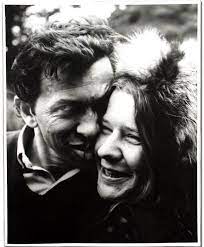 squirting cars with a water hose as the car went by …. You’d see Janis Joplin shopping on Haight Street.” )
The ideology of the hippie counterculture was also largely present in the music performance scene. In his essay When Music Mattered, Mat Callahan talks about how many concerts of the time were open to the public, free of charge, and performed in open air on the streets. The concerts weren’t all about music; they provided a social platform for like-minded individuals. The Grateful Dead, who appeared quite frequently under Graham over the years, was known for making music that was hard to commercialize. Even the recordings of the band had a grassroots, anti-capitalist feeling to them; they set up a ‘tapers section’ at their concerts so people would be able to record them directly. Callahan describes the importance of music to the hippie counterculture:
“Music mattered because it consciously and directly challenged the state. It did this by granting permission to do things the state prohibited or restricted. Dancing, drug taking, and sexual adventure were all encouraged by music in defiance of laws regulating such activities.”
More Coming Soon